For many people, questions about marriage and having children are considered a normal part of everyday conversation. Friends, relatives, coworkers, and even strangers often assume that every adult will eventually follow the same life path—find a partner, get married, and become a parent. While these conversations may seem harmless, they can become deeply personal and uncomfortable for people whose lives follow a different course. Some couples decide they do not want children, while others face medical or personal circumstances that make parenthood more complicated.
In many cases, society is quick to judge decisions that are, in reality, deeply personal and belong only to the individuals involved. For people living with disabilities, those judgments can become even more intense. Instead of focusing on their abilities, kindness, or independence, many people immediately assume that they are incapable of making important life decisions.
These assumptions often create barriers that are more challenging than the disability itself. Yet throughout history, countless individuals with disabilities have shown that they can work, build relationships, contribute to their communities, and live meaningful, independent lives. Their stories remind us that every person deserves to be treated with dignity and respect rather than being defined by stereotypes.
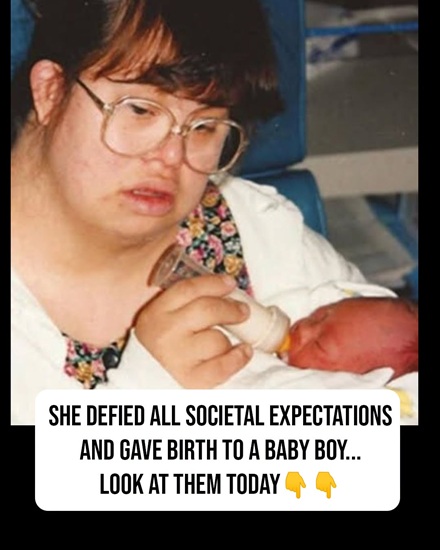
One such story is that of Lisa White, a woman from California whose journey into motherhood challenged many long-held misconceptions about people with Down syndrome. Her experience attracted attention because it raised questions that many people had never considered before. Instead of responding with fear or judgment, Lisa’s family chose to support her, believing that she deserved the same opportunity to make decisions about her own life as anyone else. Their unwavering encouragement became one of the most important foundations in her journey.

Down syndrome is a genetic condition caused by the presence of an extra copy of chromosome 21. It can affect learning, physical development, and overall health in different ways, but every individual with Down syndrome is unique. Some people require significant daily support, while others are able to live independently, maintain employment, form lasting friendships, and actively participate in their communities. Medical understanding and social support have improved dramatically over the years, allowing many individuals with Down syndrome to enjoy longer, healthier, and more independent lives than ever before.
Long before becoming a mother, Lisa had already demonstrated that she was capable of taking care of herself. By the age of twenty-nine, she had been living independently for more than a decade. She maintained her own apartment, handled many everyday responsibilities, and worked full-time at a local Goodwill store. According to her mother, Patti White, Lisa enjoyed her job and was well-liked by both her coworkers and customers. She was known for her warm personality, strong work ethic, and ability to connect with people from all walks of life.
Patti had always encouraged her daughter to become as independent as possible. Like many parents of children with disabilities, she wanted Lisa to have the opportunity to experience adulthood in the fullest sense. That meant supporting her education, helping her develop life skills, and allowing her to make her own decisions whenever possible. Although there were challenges along the way, Patti believed that independence was essential to her daughter’s confidence and happiness. Over the years, she watched Lisa grow into a responsible and caring adult who took pride in managing her own life.
As Lisa entered adulthood, she also developed meaningful personal relationships. She began dating a man who also had Down syndrome. Their relationship was built on companionship, mutual affection, and shared experiences. Like many adult couples, they enjoyed spending time together while maintaining separate homes. Patti recognized that her daughter was experiencing a healthy adult relationship and believed it was important to have open conversations about topics such as personal responsibility, birth control, and safe relationships rather than avoiding those discussions.

At the time, however, much of the available medical information suggested that men with Down syndrome were generally infertile. Because of that belief, many families were told that pregnancy was extremely unlikely. Patti later recalled that healthcare professionals and educational materials had reassured parents not to worry because pregnancy was considered rare in such circumstances. While the possibility was certainly lower than in the general population, it was not impossible. As events would soon prove, life sometimes unfolds in unexpected ways.
One ordinary afternoon, Patti returned from lunch at work and checked her voicemail. Among the messages waiting for her was one from Lisa, who sounded unusually excited. The message contained news that Patti never expected to hear. Lisa happily announced that her mother was going to become a grandmother. Patti later admitted that her mind immediately filled with questions. She wondered how it had happened, whether the pregnancy was real, and what the future might hold for her daughter and the child. Like any parent receiving surprising news, she experienced a mixture of shock, concern, curiosity, and love within just a few moments.
After the initial surprise, Patti focused on what mattered most—supporting her daughter. Rather than allowing fear to determine her response, she chose to stand beside Lisa throughout the pregnancy. She understood that the road ahead would likely be filled with challenges, but she also believed that every family deserves compassion instead of judgment. Her decision reflected years of believing in her daughter’s abilities and recognizing her right to make important life choices. That support would become invaluable during the months that followed.
Outside the family, however, reactions were often very different. Some people questioned whether Lisa should become a mother at all. Others doubted her ability to raise a child responsibly because of her disability. These opinions were frequently based on assumptions rather than personal knowledge of Lisa’s life. Many critics had never met her, seen her daily routine, or understood the level of independence she had already achieved. Their concerns often overlooked the reality that parenting requires love, commitment, patience, and support—qualities that cannot be measured solely by a medical diagnosis.
Throughout her pregnancy, Lisa experienced many of the same physical changes that countless expectant mothers face. She attended childbirth classes, worked with a pregnancy coach, and continued to receive regular medical care. Because her pregnancy was considered high-risk, healthcare professionals monitored her closely. She later described dealing with morning sickness, fatigue, and the physical discomfort that often accompanies pregnancy. Despite these challenges, she remained determined to prepare for the arrival of her baby while continuing many of her normal daily responsibilities, including working for much of her pregnancy.
As her due date approached, anticipation grew within the family. Everyone hoped for the healthiest possible outcome while understanding that additional medical care might be necessary. When Lisa’s son, Nic, was born four weeks early, doctors confirmed that he also had Down syndrome. Like every newborn, Nic entered the world surrounded by people who cared deeply about his well-being. His arrival marked the beginning of a new chapter—not only for Lisa as a mother but also for Patti as a grandmother and for an entire family preparing to embrace the responsibilities and joys of raising a new generation.
Although Nic entered the world a few weeks earlier than expected, his arrival brought immense joy to his family. Like many babies born with Down syndrome, he required careful medical attention during his early days, but his birth was first and foremost a celebration for those who loved him. Lisa embraced motherhood with determination, while Patti stepped into the role of a supportive grandmother. Together, they focused on creating a stable and loving environment where Nic could grow, learn, and develop at his own pace. Their family understood that raising any child comes with responsibilities, and they were committed to meeting those challenges together.
The months that followed were filled with the ordinary experiences of caring for a newborn. Sleepless nights, feeding schedules, medical appointments, and learning the routines of parenthood became part of daily life. Like many first-time mothers, Lisa discovered that raising a child required patience, consistency, and constant learning. Her family remained close, offering guidance whenever it was needed while encouraging Lisa to take an active role in caring for her son. Their approach was based on support rather than replacing her responsibilities, helping her build confidence as a parent.
As Nic grew older, it became clear that he, too, had his own personality, interests, and strengths. Every child develops at a different pace, and children with Down syndrome are no exception. While some milestones required additional time or specialized support, each achievement represented an important step forward. His family celebrated every success, no matter how small it appeared to others. Those moments reinforced their belief that progress should be measured by individual growth rather than comparisons with anyone else.
Life, however, was not without hardship. A few years after Nic’s birth, tragedy struck when his father passed away. According to publicly available accounts, Nic was only five years old at the time. Losing a parent at such a young age is an enormous challenge for any child, and the loss affected the entire family. In the years that followed, Lisa became a single mother while continuing to raise her son with the unwavering support of Patti. Together, the two women worked to provide Nic with the stability, encouragement, and love that every child deserves.
Despite the support of her family, Lisa continued to face criticism from people who questioned her decision to become a mother. Some believed that her disability automatically meant she could not raise a child successfully. Others worried that her example might encourage other adults with Down syndrome to have children, reflecting attitudes rooted more in misunderstanding than in facts. These reactions were painful for Lisa and those closest to her, but they also highlighted the importance of challenging outdated assumptions about disability and parenthood.
One particularly difficult consequence of these attitudes was the loss of some friendships. According to Patti White, certain parents discouraged contact because they feared Lisa’s experience would influence their own daughters. While those decisions were disappointing, they also illustrated how misconceptions can affect not only individuals but entire families. Rather than allowing those experiences to define them, Lisa and Patti chose to focus on the relationships that remained supportive and positive. They continued building a life centered on family, respect, and perseverance.
Throughout Nic’s childhood, education played an important role in his development. Like many students with Down syndrome, he benefited from educational opportunities designed to help him reach his full potential. Teachers, family members, and community supporters encouraged him to develop practical skills, build confidence, and pursue his interests. His progress demonstrated what researchers and educators have emphasized for years: with appropriate support, high expectations, and inclusive opportunities, many individuals with Down syndrome can continue learning well into adulthood.
As the years passed, Nic matured into a confident young man. He gradually became known not only as Lisa’s son but as an individual with his own ambitions and accomplishments. His achievements reflected years of dedication from both himself and the people who had encouraged him along the way. Rather than allowing public expectations to define his future, he continued building his own path through education, personal growth, and meaningful relationships.
One of the milestones that drew public attention was Nic’s graduation from college. His educational achievement represented much more than earning a qualification. For many observers, it served as a reminder that individuals with Down syndrome are capable of reaching goals that previous generations may have considered impossible. Every success challenged long-standing stereotypes and encouraged broader conversations about inclusion, accessibility, and equal opportunity. While each person’s abilities are different, Nic’s story demonstrated what determination and strong family support can accomplish.
Throughout interviews over the years, Nic has spoken warmly about the two women who shaped his life. He has expressed gratitude for both his mother and his grandmother, acknowledging the sacrifices they made to provide him with love, guidance, and encouragement. His comments reflected deep appreciation for the family environment that helped him become the person he is today. Their relationship serves as a reminder that successful parenting is often strengthened by extended family members who work together during both joyful and difficult moments.
In 2016, Patti White shared a heartfelt message on Facebook reflecting on the remarkable journey her family had experienced. Alongside a photograph of Lisa and Nic smiling together, she wrote about the milestones they had reached over the previous two decades. She celebrated Lisa turning fifty, Nic approaching twenty, and the loving bond they continued to share. Patti explained that her greatest hope when Lisa became pregnant had simply been for mother and son to know one another, build a relationship, and experience life together. Looking back after many years, she believed they had achieved far more than anyone could have imagined.
The family’s story has often been shared because it encourages thoughtful discussion rather than simple conclusions. It does not suggest that every situation is the same or that every family will have identical experiences. Instead, it highlights the importance of evaluating individuals based on their own circumstances, abilities, and support systems rather than relying on assumptions. Disability is only one aspect of a person’s identity, and it should never be the sole factor used to judge someone’s character, potential, or worth.
Medical professionals continue to emphasize that every pregnancy involves its own unique considerations and risks. Likewise, every individual with Down syndrome has different strengths, challenges, and levels of independence. Decisions about parenthood are deeply personal and should always involve appropriate medical advice, family discussions, and careful consideration of each person’s circumstances. Lisa’s experience represents one family’s journey rather than a universal outcome, making it important to avoid broad generalizations while still recognizing the significance of their story.
Today, Lisa, Patti, and Nic remain symbols of resilience for many people who have followed their journey over the years. Their experiences have encouraged conversations about disability, inclusion, family support, and the importance of treating every individual with dignity. Instead of allowing public criticism to define their lives, they focused on building meaningful relationships and celebrating each milestone together. Their story reminds readers that compassion often begins with listening before judging and understanding before making assumptions.
Ultimately, the lasting message of their journey is not simply about Down syndrome or parenthood. It is about recognizing the humanity that connects all families regardless of their circumstances. Love, commitment, patience, and support are qualities that cannot be measured by stereotypes or assumptions. By choosing compassion over prejudice and opportunity over limitation, Lisa, Patti, and Nic have shown that every person’s story deserves to be understood on its own merits. Their lives continue to inspire conversations about acceptance, respect, and the belief that every individual should be given the chance to reach their fullest potential.
