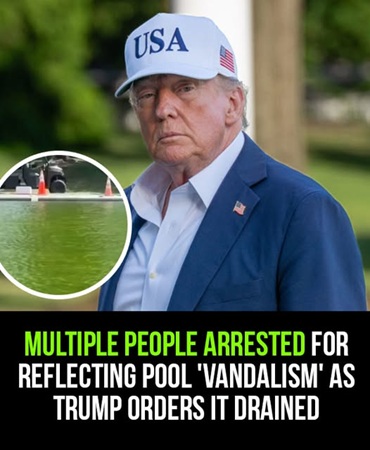
Recent reports have drawn significant attention to the condition of the Lincoln Memorial Reflecting Pool in Washington, D.C., following claims that multiple individuals were arrested in connection with alleged vandalism. According to statements shared publicly, former U.S. President Donald Trump claimed that several people had been detained over incidents involving damage to the historic site. The situation has sparked debate, particularly due to the scale of the renovation project and the rapid emergence of reported issues afterward.
In public remarks shared on social media, Trump stated that law enforcement had taken multiple individuals into custody for allegedly vandalizing the Reflecting Pool. He described the matter as serious and emphasized that damage to national monuments should be treated as a major offense. In follow-up comments, he also suggested that repairs and further action would be necessary, including draining the pool to address the reported damage and maintenance concerns.
Among those mentioned in various reports is David Hearn, described as a 67-year-old former Olympic canoeist from Maryland. According to the claims circulating in media coverage, Hearn was detained after an incident at the site while passing through the area during a long bicycle ride. Reports state that he allegedly touched or inspected peeling paint on the surface of the pool and was subsequently questioned and arrested by authorities. He has reportedly denied any intentional wrongdoing, stating that he was simply observing the condition of the structure as a passerby.
The circumstances surrounding his detention have raised questions about procedure and intent. Some reports indicate that he was held for several hours before being processed, while his account suggests he did not expect the situation to escalate into legal action. Authorities have not publicly provided detailed clarification regarding the specific evidence or reasoning behind the charges as described in media reports.
Separately, attention has also focused on the condition of the Reflecting Pool itself following a recent renovation project. According to the information provided in reports, the pool underwent improvements earlier in the year as part of a broader effort to restore and enhance public monuments in Washington, D.C. The renovation reportedly included a distinctive blue coating applied to the pool’s surface.
However, shortly after reopening, issues reportedly emerged, including discoloration of the water and signs of algae growth. Maintenance crews were observed treating the water with chemical solutions in an attempt to restore clarity. At the same time, sections of the applied coating were said to have begun peeling, raising concerns about the durability of the renovation work.
Some scientists and environmental observers cited in reports suggested that the Reflecting Pool’s shallow depth and exposure to sunlight make it naturally vulnerable to algae growth during warmer months. These conditions, they noted, can make maintenance particularly challenging, regardless of cosmetic or structural upgrades.
In response to the reported deterioration, Trump stated that the situation appeared to be serious enough to require additional intervention, including draining the pool for repairs. Earlier comments had suggested that the issues were improving, but later statements indicated that further work would be necessary to fully restore the site.
The situation has also been complicated by additional reports referencing markings found near the area, which some officials interpreted as potentially symbolic or threatening. These claims have not been fully explained publicly, but they have added to the broader controversy surrounding the site and its recent condition.
At this time, there has been no fully independent verification of all claims presented in circulating reports, and official responses from some agencies have not been made public or have not addressed specific details. As a result, the situation remains a developing and disputed topic, with differing accounts between public statements, media reporting, and official clarification.
