Many people choose their sleeping position based purely on comfort, without realizing that posture during sleep can influence how the body manages digestion and acid balance. While sleep is often considered a passive state, the body continues to perform essential functions throughout the night, including digestion and acid regulation. For some individuals, especially those with acid reflux or gastroesophageal sensitivity, sleeping position may play a meaningful role in symptom management.
The human digestive system does not shut down during sleep. Instead, it continues to process food and regulate stomach acid production. Because the body is lying horizontally during rest, gravity no longer assists in keeping stomach contents in place as effectively as when standing or sitting. This is why body position can sometimes influence how comfortably a person sleeps, particularly if they are prone to reflux symptoms.
The Relationship Between Stomach Anatomy and Acid Flow
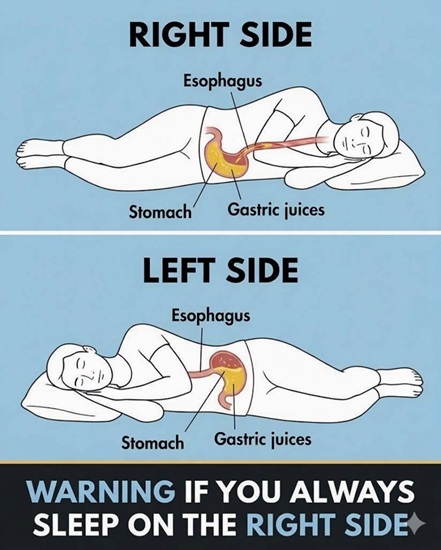
The stomach is naturally shaped in a way that is not perfectly symmetrical, and its position relative to the esophagus plays a role in how digestive contents are contained. When a person lies on their right side, the anatomical alignment may allow stomach contents to rest closer to the lower esophageal sphincter, which is the muscle responsible for preventing acid from moving upward.
In individuals who are sensitive to acid reflux, this position may increase the likelihood of experiencing discomfort such as heartburn or regurgitation. On the other hand, some studies and physiological observations suggest that lying on the left side may reduce the tendency for acid to move upward due to the way gravity interacts with stomach positioning. This does not mean one position is harmful for everyone, but rather that effects can vary depending on individual health conditions.
Left-Side Sleeping and Digestive Comfort
Left-side sleeping is often discussed in medical literature as a potentially beneficial position for people who experience frequent acid reflux symptoms. In this position, the stomach is positioned in a way that may help keep acid lower in the digestive tract, reducing the chance of it flowing back into the esophagus.
However, it is important to understand that this is not a guaranteed treatment or cure for reflux-related conditions. It is more accurately described as a supportive habit that may reduce symptoms in some individuals. Many people with mild or occasional discomfort report improvement when adjusting their sleep position, but results can vary significantly.
Right-Side Sleeping and Health Considerations
Sleeping on the right side is not inherently harmful for the general population. Most healthy individuals rotate positions naturally throughout the night, and the body is capable of adapting to different postures without long-term issues. There is no evidence suggesting that right-side sleeping directly causes digestive disease in otherwise healthy people.
However, for individuals who already experience gastroesophageal reflux disease (GERD), nighttime symptoms may feel more noticeable in certain positions. In these cases, right-side sleeping may contribute to increased discomfort, especially when combined with other factors such as late-night eating or heavy meals.
Common Symptoms Associated With Nighttime Reflux
People who suffer from acid reflux often report a range of symptoms that tend to worsen when lying down. These may include a burning sensation in the chest, a sour or acidic taste in the mouth upon waking, throat irritation, or a persistent dry cough during the night or early morning hours.
Some individuals may also experience disturbed sleep due to discomfort, which can lead to fatigue during the day. These symptoms are often influenced by multiple lifestyle factors, including diet, meal timing, stress levels, and sleeping posture.
The Importance of Meal Timing and Evening Habits
One of the most significant contributors to nighttime reflux is eating large meals shortly before going to bed. When the stomach is full and a person lies down soon after eating, digestion becomes less efficient due to the lack of gravitational support. This increases the likelihood of acid movement toward the esophagus.
Experts often recommend allowing a gap of at least two to three hours between the last meal of the day and lying down to sleep. Lighter evening meals may also reduce the risk of discomfort. Certain foods and beverages, such as high-fat meals, spicy foods, chocolate, caffeine, and alcohol, are commonly associated with increased reflux symptoms in sensitive individuals.
Lifestyle Factors That Influence Digestive Comfort
Beyond sleep position and diet, several lifestyle factors can affect nighttime digestive health. Body weight, for example, can influence abdominal pressure, which may contribute to reflux symptoms in some individuals. Maintaining a healthy weight is often recommended as part of an overall strategy to support digestive comfort.
Elevating the head during sleep is another commonly suggested adjustment. This can be done using a wedge pillow or by slightly raising the head of the bed frame. This positioning helps use gravity to reduce the likelihood of stomach contents moving upward during sleep.
When Symptoms Should Be Taken Seriously
Occasional heartburn is relatively common and does not always indicate a serious medical condition. However, frequent or persistent symptoms should not be ignored. If discomfort occurs multiple times per week or is accompanied by difficulty swallowing, unexplained weight loss, or ongoing chest pain, medical evaluation is recommended.
It is important not to assume all chest discomfort is related to digestion, as some symptoms can overlap with other medical conditions. A healthcare professional can help determine the underlying cause and recommend appropriate treatment if necessary.
The Role of Awareness and Body Signals
Understanding how the body responds to different habits is an important part of maintaining long-term health. Sleep position is just one of many factors that can influence how comfortably a person sleeps and how their digestive system behaves overnight.
Some individuals may find that small adjustments in daily routine, such as changing sleep position or modifying meal timing, lead to noticeable improvements. Others may not experience significant changes, highlighting the fact that the body responds differently from person to person.
A Balanced Approach to Sleep and Digestive Health
Rather than focusing on a single “correct” sleep position, it is more helpful to view digestive health as a combination of habits and lifestyle choices. Sleep posture, diet, timing of meals, and overall wellness all contribute to how the body functions during rest.
For individuals experiencing mild symptoms, experimenting with different sleep positions may provide helpful insights. For those with persistent or severe discomfort, professional medical guidance is essential to ensure proper diagnosis and treatment.
Ultimately, the goal is not perfection in sleeping posture, but awareness of how everyday choices influence well-being. Small adjustments, made consistently over time, can often lead to improved comfort and better quality of sleep.
