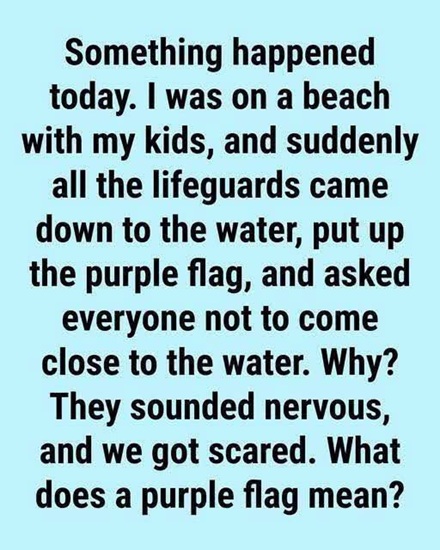
A quiet purple flag waving along a shoreline is often a subtle but important warning from lifeguards and coastal safety teams. It is a signal that the ocean may contain potentially hazardous marine life, and beachgoers should be more aware of their surroundings. While the beach may still appear calm and inviting, the flag indicates that certain risks exist beneath the surface. This warning does not mean that the water is closed or unsafe in every situation, but rather that specific conditions have been observed that require extra caution.
Many people enjoy swimming, surfing, or wading in the ocean without realizing how quickly marine conditions can change. The purple flag serves as a reminder that nature is unpredictable and deserves respect. The purple flag system is commonly used in coastal regions to alert the public to the possible presence of dangerous marine life. This can include jellyfish, stingrays, Portuguese man o’ war, or other sea creatures that may cause painful or harmful stings.
These animals can be carried closer to shore by tides, currents, and seasonal water temperature changes. Even on days when the water looks clear and calm, marine life can still be present just below the surface. Conditions such as warm currents, wind shifts, or plankton movement can influence where these creatures gather. The purple flag helps communicate this risk in a simple and visible way so that beach visitors can make informed decisions.
Lifeguards use this warning based on observations, reports, and environmental conditions that suggest an increased likelihood of encounters with stinging marine life.
Common Marine Life Associated With the Warning
Several types of marine creatures are often linked to purple flag warnings. Jellyfish are among the most common, and while many species are harmless, some can deliver painful stings that irritate the skin. Portuguese man o’ war, although often mistaken for jellyfish, are another example and can cause more severe reactions.
Stingrays may also be present in shallow coastal waters, especially in warm climates where they tend to rest in sandy areas. When accidentally stepped on, they can react defensively. Other small marine organisms may also pose minor risks depending on the region and season.
It is important to understand that these creatures are a natural part of the ocean ecosystem. Their presence does not mean the ocean is dangerous overall, but rather that certain precautions should be taken.
Safe Behavior When a Purple Flag Is Displayed
When a purple flag is flying, beach safety experts recommend adopting simple but effective precautions. One commonly advised practice is shuffling your feet while walking in shallow water, which can help alert stingrays and reduce the chance of stepping directly on them.
Keeping children close and under supervision is also important, especially in areas where visibility underwater may be limited. Avoiding swimming in areas where marine life has been spotted can further reduce risk. In many cases, lifeguards are available to provide updated information about current conditions.
Talking to lifeguards before entering the water is one of the most reliable ways to understand local conditions. They are trained to monitor hazards and can offer guidance based on real-time observations.
Understanding the Ocean’s Natural Changes
Ocean conditions are constantly changing due to tides, weather patterns, and water temperature shifts. These changes can influence where marine life appears and how close it comes to shore. Even a beach that appears safe in the morning may experience different conditions later in the day.
This unpredictability is part of what makes the ocean both beautiful and powerful. The purple flag is not meant to discourage enjoyment of the beach but rather to encourage awareness. Understanding these natural patterns helps swimmers and visitors make safer choices.
Respecting the ocean means recognizing that it operates on its own system, which cannot be fully controlled or predicted.
Staying Safe While Enjoying the Water
Beach safety is often about awareness rather than avoidance. Many people continue to enjoy swimming and water activities even when caution flags are displayed, as long as they follow guidance and remain attentive. Simple habits such as watching for posted warnings, avoiding unfamiliar areas, and staying within designated swimming zones can significantly reduce risk.
The ocean offers recreation, relaxation, and natural beauty, but it also requires respect. Being informed about warning flags like the purple flag allows visitors to enjoy the water responsibly while minimizing unnecessary risks.
In many coastal areas, safety systems are designed to ensure that people can still enjoy the beach experience while being aware of environmental conditions. Awareness Creates Safer Experiences
The purple flag serves as a reminder that the ocean is a dynamic environment where conditions can change quickly. It highlights the possible presence of marine life that may pose minor risks, encouraging visitors to be cautious and observant.
Rather than creating fear, the warning is intended to promote awareness and responsible behavior. By understanding what the purple flag means and following basic safety practices, beachgoers can continue to enjoy the ocean while reducing the likelihood of unwanted encounters.
Ultimately, respecting these signals helps ensure that time spent at the beach remains both enjoyable and safe.
