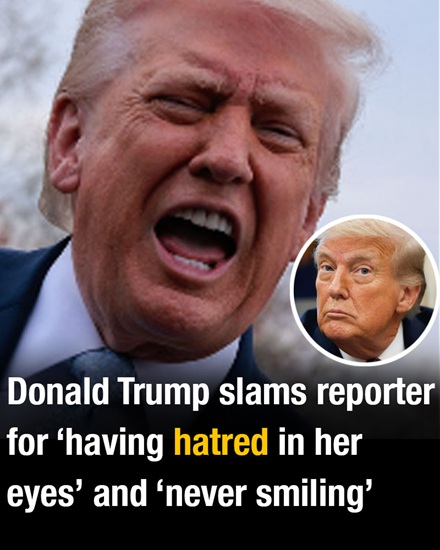
In recent years, interactions between political leaders and journalists have increasingly become major news stories in their own right. Press briefings that were once focused primarily on policy announcements now often generate headlines because of the exchanges that occur between elected officials and members of the media. One such exchange took place during a press briefing in the Oval Office on June 3, when President Donald Trump responded to questions from reporters regarding a proposed Department of Justice compensation initiative that had already generated significant public discussion.
The proposal reportedly involved approximately $1.8 billion in funding and was intended to address claims from individuals who believed they had been unfairly targeted by federal prosecutors. The idea quickly became the subject of debate among political observers and lawmakers. Critics of the proposal argued that the program could potentially benefit people connected to the January 6 events at the U.S. Capitol, including individuals who had been convicted of crimes related to the incident.
Supporters, meanwhile, maintained that concerns about alleged government overreach deserved attention and that any proposal should be evaluated based on its specific details rather than broad political assumptions. As reporters gathered inside the Oval Office, questions focused on whether the proposed initiative was moving forward, had been delayed, or had been abandoned altogether. Journalists sought clarification from the president regarding the status of the plan.
During the discussion, Trump did not immediately provide a direct answer regarding the future of the proposed fund. Instead, he broadened the conversation to include criticism of previous administrations and longstanding political disagreements. The president argued that government institutions had been used unfairly against some of his supporters and political allies. His remarks reflected themes that have frequently appeared in his public statements throughout recent years.

As the exchange continued, attention shifted away from the policy discussion and toward a more personal interaction involving CNN chief White House correspondent Kaitlan Collins. Without being directly prompted about the journalist, Trump began criticizing CNN and its coverage, describing the network in negative terms while also directing comments toward Collins personally.
The remarks immediately attracted attention because they moved beyond policy matters and focused on the reporter herself, something that has occurred during several previous exchanges between Trump and members of the press. Trump commented on Collins’ demeanor during press briefings, suggesting that she rarely smiles and describing her facial expressions in a way that quickly became a topic of discussion online.
Political supporters and critics alike reacted to the moment, with some viewing it as another example of Trump’s confrontational communication style and others seeing it as an unnecessary personal attack. Throughout much of the exchange, Collins remained focused on the original policy question that had prompted the discussion in the first place.
Rather than responding to the personal remarks, she returned to the issue of the proposed Department of Justice fund and sought a clear explanation regarding its status. Her response drew attention because it redirected the conversation from personality-focused commentary back toward a specific government policy issue. When asked whether the proposed fund was active, paused, or canceled, Trump indicated that he would need to consult legal advisors before providing a definitive answer.
That response generated additional questions because reporters were seeking clarification about a proposal that had already received significant public attention and criticism. As the conversation continued, Collins attempted to obtain more detailed information regarding the administration’s position on the issue. The exchange became increasingly tense, reflecting the sometimes adversarial relationship that can develop between public officials and journalists during high-profile press briefings.
Observers noted that the interaction highlighted two competing priorities often present in modern political journalism: maintaining accountability through persistent questioning and managing increasingly polarized public discourse. At one point, Trump returned to discussing Collins rather than the policy issue, continuing a pattern that has appeared in several previous public interactions between the two.
Over the years, Collins has become one of the most recognizable White House correspondents covering the Trump administration and has frequently participated in high-profile press conferences. Her reporting style often involves asking direct follow-up questions when she believes an answer has not fully addressed the issue under discussion. Supporters of that approach argue that follow-up questions are an essential part of journalism because they help clarify statements made by public officials.
Others argue that confrontational exchanges can sometimes distract from substantive policy discussions and contribute to growing tensions between government officials and the press. Regardless of perspective, the relationship between political leaders and journalists remains a central component of democratic institutions and public accountability. During the June 3 exchange, Collins continued to pursue answers regarding the proposal rather than focusing on the personal comments directed toward her.
That decision became a notable aspect of media coverage following the event, with some commentators suggesting that her response reflected a commitment to maintaining focus on policy matters. The interaction also reignited broader conversations about how journalists are treated during press conferences and whether personal remarks help or hinder public understanding of important issues.
Discussions about media treatment are not new and have accompanied political reporting for decades across multiple administrations and political parties. The role of journalists has historically involved asking difficult questions, seeking clarification, and providing information to the public about government decisions and policies. Likewise, elected officials often challenge reporters whom they believe are unfair, inaccurate, or politically motivated in their coverage.
These tensions can create dramatic moments that attract widespread public attention, particularly when they occur in highly visible settings such as the Oval Office. Media analysts noted that the exchange reflected larger trends in political communication, where personality-driven moments frequently receive as much attention as policy discussions themselves. As clips of the interaction circulated online, viewers debated both the substance of the proposed fund and the tone of the exchange between the president and the journalist.
Some focused primarily on the policy questions that remained unanswered, while others concentrated on the personal comments and the broader relationship between political leaders and the media. The discussion also highlighted how modern press briefings can quickly become national talking points due to social media distribution and round-the-clock news coverage. A brief exchange that might once have been seen only by reporters in the room can now reach millions of viewers within hours through video clips and online commentary.
This reality has changed the way political communication is experienced by the public, making every interaction potentially significant beyond the immediate news cycle. The June 3 briefing became another example of how a routine policy question can evolve into a broader conversation about journalism, public accountability, and political rhetoric. Whether viewed as a clash of personalities or a debate about the role of the press, the exchange generated substantial public interest and media coverage.
For many observers, the incident underscored the continuing importance of clear communication between government officials and journalists during discussions involving public policy and taxpayer-funded programs. As political divisions remain strong across the United States, interactions between elected leaders and members of the press are likely to continue attracting significant attention from audiences across the political spectrum.
Ultimately, the exchange served as a reminder that modern press conferences often function as both information-sharing events and public forums where competing perspectives on government, accountability, and media responsibility are displayed in real time.
