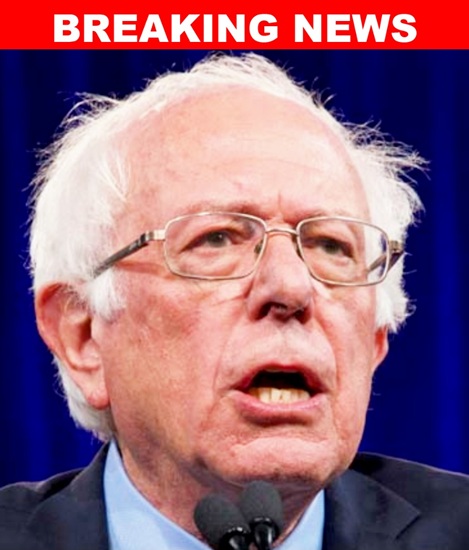
Critics, however, continue to point toward failed presidential campaigns, controversial policy proposals, and intense political divisions that surrounded his rise within national politics. Even so, many observers across the political spectrum acknowledge that Sanders changed the tone and direction of political discussions in America.
One reason Sanders continues to attract attention is the consistency of his public message over several decades. Long before his presidential campaigns brought him worldwide recognition, he frequently criticized wealth inequality and warned about what he believed was growing economic pressure on middle-class and working-class Americans.
Supporters often share older clips from the 1980s, 1990s, and early 2000s where Sanders discussed healthcare costs, wages, student debt, campaign financing, and corporate power. Many online users now compare those older speeches to current economic concerns, arguing that some of his warnings appear more relevant today.
At the center of Sanders’ political identity has always been his focus on economic fairness. Throughout his career, he repeatedly argued that ordinary workers were struggling while large corporations and the wealthiest Americans gained increasing financial influence and political power.
His campaigns especially resonated with younger voters during the 2016 and 2020 presidential elections. Many first-time voters said Sanders was the politician who made them pay attention to issues like healthcare reform, student debt, climate change, and wage inequality for the first time.
During the 2016 Democratic primary, Sanders launched a surprisingly competitive campaign against Hillary Clinton. At the beginning, many political analysts viewed his campaign as a long shot with little chance of success against a well-established national political figure.
However, Sanders quickly built a large grassroots movement powered by small donations and strong support among younger voters. Massive campaign rallies across the country drew national media attention and helped establish him as one of the most influential progressive politicians in modern American history.
One of the defining themes of his campaign was his opposition to corporate political influence and large campaign donors. Sanders frequently emphasized that his campaigns relied heavily on small individual contributions rather than support from major corporate-backed political organizations.
His supporters viewed this as proof of authenticity and independence. Critics argued that some of his proposals lacked practical financial details or underestimated the complexity of implementing large-scale national reforms within the American political system.
Healthcare became one of Sanders’ most recognizable political issues. He strongly supported a universal healthcare system often described as “Medicare for All,” arguing that healthcare should be treated as a human right rather than primarily as a business-driven industry.
Supporters believed his healthcare proposals addressed major concerns about medical debt and insurance costs. Opponents argued that such reforms would involve enormous government spending and potentially major disruptions to existing healthcare systems and private insurance structures.
Education policy also became a major focus during Sanders’ campaigns. He advocated for lower college costs and highlighted the growing financial burden faced by students and graduates dealing with large amounts of debt across the United States.
Many younger Americans connected deeply with those messages, particularly during periods when tuition prices and housing costs were becoming increasingly difficult for younger generations to manage financially. Sanders’ speeches often reflected frustration shared by millions of struggling voters.
At the same time, Sanders also became a polarizing political figure. Some moderate Democrats believed his political style and policy positions were too aggressive or too far left to succeed in a general national election against Republican candidates.
The 2016 Democratic primary became especially controversial among Sanders supporters. After Clinton secured the Democratic nomination, many Sanders voters expressed disappointment and frustration over how the primary process unfolded during that election cycle.
Years later, debates surrounding the 2016 primary still remain emotionally charged online. Some supporters continue to believe Sanders faced institutional resistance from parts of the Democratic establishment, while others argue the primary results reflected broader voter preferences nationwide.
In 2020, Sanders once again launched a presidential campaign that attracted major attention and large crowds. For a period of time, he appeared to be one of the strongest candidates competing for the Democratic nomination during a crowded field of candidates.
His campaign once again focused heavily on economic reform, healthcare expansion, climate policy, labor rights, and campaign finance reform. Younger voters continued to play a central role in the movement surrounding his candidacy.
However, after several key primary contests, moderate Democratic candidates consolidated support behind Joe Biden, who eventually secured the Democratic nomination and later won the presidency in the 2020 general election.
Even after those losses, Sanders remained highly influential within American political discussions. Many ideas once considered politically unrealistic gradually entered mainstream debate, including discussions about minimum wage increases, student debt relief, and broader healthcare reform.
Political analysts often note that Sanders helped push the Democratic Party further toward progressive economic policies, particularly among younger lawmakers and activists who entered politics inspired by his campaigns and messaging.
Another reason Sanders remains widely discussed is his communication style. Unlike many carefully scripted political speeches, Sanders often speaks in direct, emotional language that supporters view as passionate and authentic rather than overly polished or rehearsed.
That style helped create a strong emotional connection with many voters. Supporters frequently describe him as someone who appeared genuinely angry about economic inequality and social struggles affecting ordinary families across the country.
At the same time, critics sometimes viewed his rhetoric as overly negative or divisive. Some opponents argued that his repeated criticism of billionaires, corporations, and wealthy political donors created an oversimplified picture of complex economic problems.
Still, even many political opponents acknowledge Sanders’ consistency. One of the most common observations made by commentators is that Sanders has maintained remarkably similar political positions for decades despite dramatic shifts in American political culture over time.
Recently, renewed online attention surrounding Sanders has been fueled partly by viral compilations of older interviews and speeches. Social media users have shared clips where Sanders discussed issues like rising living costs, healthcare affordability, and income inequality many years ago.
Supporters argue these older clips now sound especially relevant because many Americans continue facing concerns about inflation, housing affordability, healthcare expenses, and economic uncertainty in everyday life.
Importantly, however, some viral social media posts exaggerate or misrepresent certain claims surrounding Sanders’ predictions. While he consistently warned about economic inequality and corporate influence, online users sometimes frame older clips as if he predicted specific modern events with exact accuracy.
In reality, Sanders spoke broadly about long-term economic and political trends rather than specific future incidents. Separating factual historical context from exaggerated online narratives remains important when evaluating viral political content.
Another major aspect of Sanders’ legacy involves political engagement among younger Americans. Many political scientists and journalists have credited his campaigns with energizing large numbers of first-time voters and encouraging political participation among younger generations.
Online discussions frequently include stories from voters who say Sanders inspired them to become politically active, volunteer for campaigns, follow public policy debates, or vote consistently for the first time in their lives.
At the same time, critics argue that some expectations created during Sanders’ campaigns led to frustration among supporters when large political reforms failed to happen as quickly or dramatically as many had hoped.
Still, few deny the scale of his influence. Sanders transformed from a longtime senator known mainly within political circles into an internationally recognized political figure whose speeches and campaign moments continue circulating years after major elections ended.
Even his public image became culturally recognizable. Memes, viral debate moments, and widely shared photographs helped Sanders reach audiences far beyond traditional political news consumers, especially among younger internet users.
One particularly famous moment occurred during the 2021 presidential inauguration, when a photograph of Sanders sitting in winter mittens quickly became one of the most shared political images online, generating countless memes and cultural references worldwide.
Despite decades in politics, Sanders continues serving as a U.S. senator representing the state of Vermont. He remains active in debates surrounding labor rights, healthcare policy, wages, taxation, and social welfare programs.
As discussions about his long-term legacy continue online, reactions remain deeply divided. To supporters, Sanders represents political honesty, consistency, and advocacy for ordinary workers against powerful institutions and economic inequality.
To critics, he represents unrealistic promises, political polarization, and policy ideas they believe would have been financially or economically difficult to implement effectively at a national level.
Yet regardless of political opinion, Sanders undeniably left a lasting mark on American politics. Few modern politicians have inspired such strong emotional reactions from both supporters and opponents over such a long period of time.
The renewed viral attention surrounding old speeches and interviews reflects more than nostalgia. It highlights how deeply Sanders influenced public conversations about healthcare, wages, education costs, corporate power, and political accountability over multiple generations.
Perhaps the most important reason people continue revisiting Sanders’ speeches today is because many of the concerns he discussed decades ago remain central national issues. Economic stress, healthcare costs, and political distrust continue shaping modern American political life.
Ultimately, the debate surrounding Bernie Sanders’ legacy may never fully end. For some Americans, he will always be remembered as a determined political outsider who challenged powerful institutions and inspired millions to become politically engaged.
For others, he will remain a controversial figure whose ambitious proposals created unrealistic expectations and intensified political divisions. But nearly everyone agrees on one thing: American politics was permanently changed by his presence, campaigns, and decades-long influence on public debate.