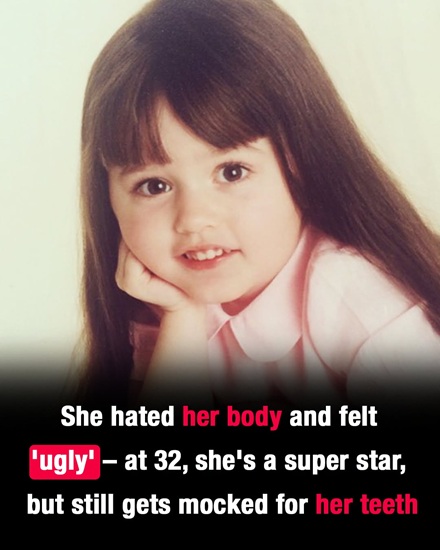
Aimee Lou Wood has become widely known for her acting work in television, but her personal journey began with significant challenges related to confidence, mental health, and early life experiences. Born on February 3, 1994, in Stockport, Greater Manchester, England, she grew up in a working-class environment shaped by both emotional complexity and family challenges during her formative years. Her early home life included instability, and she has spoken in interviews about difficult experiences during childhood, including emotional strain within the family environment and periods of personal insecurity.
From a young age, she described herself as extremely shy and socially anxious, often struggling to communicate comfortably in everyday situations, particularly in structured school environments or social settings. She has also spoken publicly about developing unhealthy relationships with food and body image during her teenage years, reflecting the emotional difficulties she experienced while growing up.

According to her interviews, she later came to understand that many of her early struggles were connected to neurodivergent traits, which were not recognized or diagnosed during her childhood. In later adulthood, she revealed that she had been diagnosed with ADHD and had been advised to explore further assessment for autism, helping her better understand her earlier experiences. She has explained that this diagnosis provided clarity about why certain social situations felt overwhelming and why she often experienced sensory or emotional overload in everyday environments.
During her school years, she attended Cheadle Hulme School, a private educational institution, after changes in her family structure and living situation following her parents’ separation. However, her time at school was difficult, and she has openly discussed being bullied, which had a lasting impact on her confidence and sense of safety during adolescence.
She has described periods where she avoided leaving her home due to anxiety and fear of social judgment, especially after repeated negative experiences in school environments. At one point, she explained that being constantly observed or judged in public spaces contributed to heightened anxiety and made everyday activities emotionally challenging.

Despite these difficulties, she eventually reached a turning point where she consciously decided to change her approach to social situations and self-expression. She has described a moment in school drama class where encouragement from a teacher helped her shift her mindset toward performance and creativity rather than withdrawal and fear. This moment became an early catalyst for her interest in acting, allowing her to explore performance as a form of expression and emotional release.
Over time, drama classes became a safe space where she could experiment with character work and build confidence in a structured and supportive environment.
After completing her secondary education, she pursued formal training at the Royal Academy of Dramatic Art (RADA), one of the most respected acting schools in the United Kingdom. Her training at RADA helped refine her performance skills and provided professional preparation for a career in film, television, and stage acting. Following graduation, she began auditioning for professional roles, gradually building her career through smaller parts before landing her breakthrough role.
Her major international recognition came with the Netflix series Sex Education, where she played the character Aimee Gibbs, a role that brought her widespread attention. She has shared that she initially had doubts about whether she would be accepted for mainstream roles due to insecurities about appearance and industry expectations. However, the casting process for Sex Education proved to be a turning point, as the role aligned with her personality and allowed her to bring authenticity to the character.

The success of the series introduced her to a global audience and established her as a rising talent in contemporary British television.
Alongside her acting career, she has also become known for speaking openly about body image, self-acceptance, and the pressures of appearance in the entertainment industry. She has addressed how media and industry standards can create unrealistic expectations for actors, particularly women, regarding appearance and physical perfection. Her appearance, including her natural dental structure, has sometimes been discussed publicly, but she has consistently emphasized individuality and authenticity over conformity.
She has stated in interviews that early insecurities about appearance were internalized during childhood but gradually diminished as she matured and gained professional confidence. Over time, she has become an advocate—intentionally or indirectly—for embracing natural features and resisting pressure to conform to narrow beauty standards. Her public visibility increased further with later projects, including roles in major international productions, which expanded her audience beyond British television.
With growing recognition, she has also experienced increased public commentary, both positive and critical, reflecting the broader scrutiny faced by actors in the entertainment industry. Despite this, she has continued to focus on her craft, emphasizing acting performance and character work rather than external perceptions of appearance. She has also spoken about the importance of mental health awareness and the value of understanding neurodiversity in creative industries.
Her journey reflects a broader cultural conversation about representation, self-image, and the evolving expectations placed on performers in modern media. Today, she is considered part of a new generation of actors who bring emotional depth, authenticity, and vulnerability to their roles.
Her career continues to develop, with each project contributing to her reputation as a versatile and expressive performer in film and television. Ultimately, her story highlights resilience, personal growth, and the importance of self-acceptance in navigating both personal challenges and professional success.
