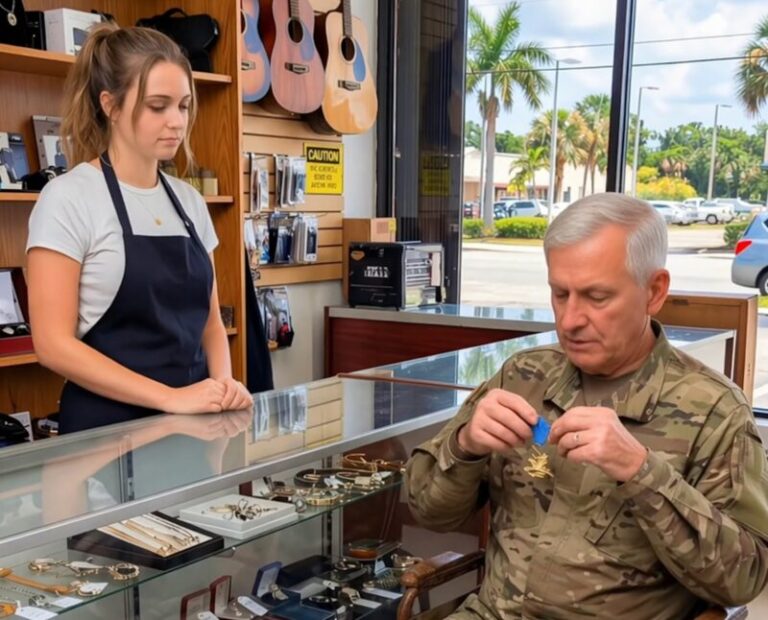
A disabled veteran, facing severe financial hardship, was forced into a painful decision after running out of basic necessities at home. With no money left for food and no clear way to support himself, he turned to the one object he had protected for years — the military medal awarded to him for bravery during his service. For him, this medal was not just a piece of metal, but a symbol of identity, sacrifice, and a past life defined by duty and courage.
The veteran’s journey to a nearby jewelry store was not easy. Confined to a wheelchair after a life-changing injury, every movement required effort and patience. The chair he used was old and worn, making the trip even more difficult. Yet he continued forward because he felt he had no other choice. The medal represented the last valuable item he owned, and selling it meant letting go of something deeply personal.
A Life Built on Service and Sacrifice
Before his injury, the veteran had served as a company commander in the military. His role required leadership in high-pressure situations, often placing him in dangerous environments where decisions had to be made quickly. Those who served with him described him as disciplined, calm under pressure, and deeply committed to protecting the soldiers under his command.
During his service, he was involved in multiple operations where he risked his life to ensure the safety of others. His medal was awarded in recognition of this bravery and dedication. However, everything changed after a severe explosion during one mission left him permanently injured. When he regained consciousness in a hospital, he learned he would never walk again.
That moment marked a sharp divide in his life — separating the identity he once knew from the uncertain future ahead.
Life After Military Service
After being discharged from service, the veteran faced a difficult transition. The structure, purpose, and support system he once relied on were suddenly gone. Although he received recognition for his bravery, it did not replace the stability he had lost.
Without strong family support or financial security, he struggled to adjust. Attempts to find work were repeatedly unsuccessful due to his disability. Over time, his world became smaller, and opportunities grew fewer. Isolation and financial strain gradually shaped his daily reality.
Through all of this, the medal remained one of his most meaningful possessions. It served as a reminder of who he had been before his injury — a capable leader, respected by his peers and committed to his mission.
The Decision to Let Go
As hardship increased, the veteran reached a breaking point. Faced with the immediate need for food and basic survival, he made the painful decision to sell his medal. It was not a choice made lightly, but rather one forced by circumstance.
He placed the medal carefully into his pocket and made his way to a jewelry store. Inside, the environment felt distant from his reality — bright lights, glass displays, and valuable items that contrasted sharply with his financial struggle.
When he approached the counter, he quietly explained his situation and placed the medal in front of the employee. His voice was low, and his emotions were difficult to hide.
A Moment of Recognition in the Store
The employee, a young woman working behind the counter, immediately noticed the emotional weight of the situation. She picked up the medal and examined it, then looked at the veteran with a sense of understanding.
When she asked if it was his award, he simply nodded and confirmed it had been given for his military service. The brief exchange carried significant emotional depth, revealing the meaning behind the object and the sacrifice it represented.
After evaluating the medal, she offered a price. The veteran accepted without negotiation, not because he agreed with its value, but because his immediate need left him no room to consider alternatives.
An Unexpected Change of Heart
After the transaction was completed, the veteran prepared to leave. However, the situation did not end there. The employee quickly followed him outside the store and asked him to stop.
She then returned the medal to him, explaining that items representing service and sacrifice should not be treated as simple commodities. She insisted that he keep it, while also allowing him to retain the money she had given.
Her actions were not part of a transaction but a gesture of compassion. She recognized that while financial help was necessary, preserving his dignity and personal history was equally important.
A Path Toward New Opportunities
In addition to returning the medal, the employee offered further assistance. She explained that her family member operated a small business that employed individuals with disabilities, focusing on giving people meaningful opportunities to rebuild their lives.
She encouraged him to consider reaching out, offering the possibility of stable work and renewed purpose. For the veteran, this suggestion introduced something he had not experienced in a long time — hope for a future beyond survival.
A Moment of Emotional Impact
The veteran accepted the medal back with visible emotion. The gesture overwhelmed him, not only because he regained a symbol of his past, but because someone had taken the time to see him as more than his circumstances.
He expressed gratitude quietly, holding the medal tightly as he processed the moment. The experience became more than a financial exchange; it became a reminder that compassion still exists in unexpected places.
Why the Story Resonates
Stories like this often resonate deeply because they reflect broader human experiences — hardship, dignity, and kindness. Whether fully factual or inspired by real events, the emotional core remains relatable: the struggle of losing stability and the impact of being seen and helped by another person.
The veteran’s experience highlights how quickly life circumstances can change, and how vulnerable individuals can find themselves in moments of crisis. At the same time, it also shows how small acts of empathy can shift the direction of someone’s life.
A Closing Reflection
The veteran did not leave the store unchanged. Although his financial struggles remained, he regained something just as important — a sense of dignity and the possibility of a new beginning.
The medal remained in his possession, but its meaning expanded beyond memory. It became a symbol not only of past service, but also of resilience in the present and hope for the future.
In the end, the encounter serves as a reminder that compassion does not always require grand actions. Sometimes it appears quietly, in a simple moment between strangers, and leaves a lasting impact far beyond what either person expects.
