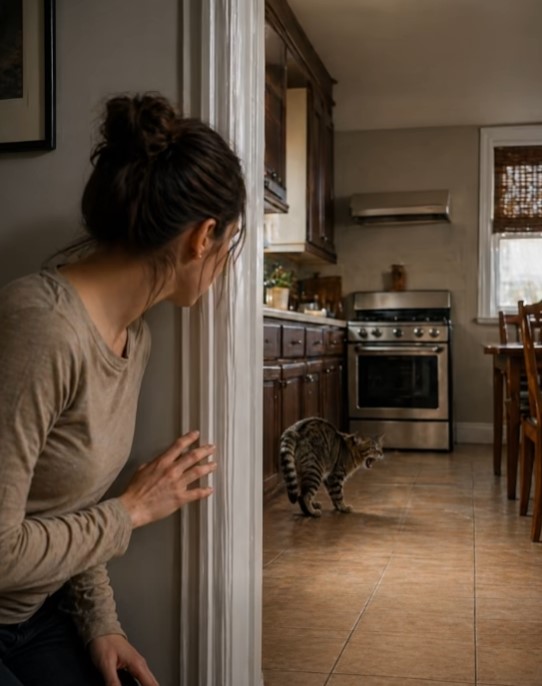
A quiet evening at home can often feel predictable and safe, filled with familiar routines and a sense of comfort. In this case, everything began normally, with nothing suggesting that anything unusual was about to happen. The environment was calm, the household was settled, and there were no immediate signs of concern. However, subtle changes in a pet’s behavior would soon shift the atmosphere completely. The family cat, typically calm and relaxed, began to act in a way that immediately stood out.
Instead of resting or moving casually through the home, it focused intensely on one specific area near the kitchen stove. This sudden behavioral change included pacing, vocalizing more than usual, and refusing to leave the spot despite repeated attempts to distract it. At first, this behavior was interpreted as simple restlessness or discomfort.
Early Warning Signs That Something Was Wrong
As time passed, the cat’s behavior became more pronounced and harder to ignore. It began to show signs of agitation, including a stiff posture, alert ears, and a fixed gaze directed toward the same location. These signals were unusual compared to its normal temperament, which made the situation increasingly concerning for the owner.
Efforts were made to calm the animal using familiar methods such as speaking softly, offering food, and gently guiding it away. However, none of these actions had any effect. The cat remained focused and unwilling to move, which created a growing sense that something in the environment was triggering its response.
This level of persistence suggested that the behavior was not random. Instead, it appeared to be driven by something specific that was not immediately visible to the human eye.
Investigating the Source of the Behavior
Given the intensity of the cat’s reaction, a closer inspection of the area was eventually decided upon. The stove, positioned against a wall, had a narrow gap that was difficult to see clearly. As the investigation began, the cat’s reaction intensified further, reinforcing the idea that something was wrong in that space.
When approaching the area, the atmosphere felt noticeably tense. The cat’s defensive posture and vocal warnings increased, almost as if it were trying to prevent closer inspection. Despite this, the decision was made to carefully examine the space behind and beside the appliance.
As attention focused on the narrow gap, movement became visible in the shadows. What initially appeared unclear soon revealed itself as something unexpected and potentially dangerous.
Discovery of a Hidden Animal in the Home
From within the confined space behind the stove, a snake was discovered. Its presence explained the cat’s behavior immediately. The animal had likely entered through a small opening or gap in the structure of the home and remained hidden in a warm, sheltered location.
The sight of the snake created an immediate sense of alarm. What had been a quiet household environment quickly shifted into a situation requiring caution and distance. The realization that a wild animal had entered the home highlighted how quickly unexpected situations can develop in everyday spaces.
At that moment, it became clear that the cat had not been acting irrationally. Instead, it had been responding to a real and present threat that had gone unnoticed by the human occupants.
Escalation of the Situation and Immediate Response
As the situation developed, the snake began to move within the confined space. Its movement toward more open areas of the kitchen increased the level of concern. The environment, once comfortable and familiar, now felt uncertain and potentially unsafe.
The immediate priority became ensuring safety and maintaining distance. The cat, however, remained unusually focused and did not retreat. Its posture remained tense and alert, indicating continued awareness of the animal’s position.
At this stage, it was clear that professional assistance was necessary. The situation required careful handling, and attempting to resolve it without proper experience could have increased the risk.
Emergency Response and Safe Removal
Emergency services or animal control professionals were contacted to handle the situation. While waiting for assistance, the household remained cautious, avoiding the affected area and monitoring any sounds or movement coming from the kitchen.
Upon arrival, trained responders assessed the situation carefully. Using appropriate equipment and safety procedures, they were able to locate and safely remove the snake from the home. The process was conducted with attention to both human safety and animal handling protocols.
Once the animal was removed, the immediate threat was eliminated. The environment gradually returned to a sense of normality, and the tension that had built up throughout the event began to fade.
The Cat’s Behavior After the Incident
After the situation was resolved, the cat’s behavior noticeably changed. It gradually returned to its normal, calm demeanor as if the previous tension had never occurred. There were no lingering signs of distress, and it resumed its usual routines within the home.
This contrast between its earlier intense reaction and later calm state highlighted the significance of its initial behavior. What seemed unusual at first was, in fact, a response to a real environmental threat.
Such behavior is often observed in animals that rely heavily on sensory perception to detect changes in their surroundings.
Understanding Animal Awareness and Instinct
Animals, particularly domestic pets like cats, have highly developed senses that allow them to detect movement, sound, and environmental changes that humans may not notice. In some cases, these heightened senses enable them to respond to dangers before they become visible.
While their behavior may sometimes appear confusing or exaggerated, it often has a logical explanation rooted in instinct. In this case, the cat’s reaction was likely triggered by subtle movement, scent, or vibration caused by the presence of the snake.
This serves as a reminder that animals can sometimes act as early indicators of hidden risks within a home environment.
The Importance of Observing Unusual Behavior
This type of situation highlights the importance of paying attention to unusual behavior in pets. While not every change in behavior indicates danger, persistent or intense reactions may signal that something in the environment requires closer inspection.
Ignoring such signs could potentially lead to missed hazards. In contrast, taking time to observe and investigate can help identify issues before they escalate.
Simple awareness and responsiveness can play an important role in maintaining safety within a household.
A Reminder About Hidden Risks in Homes
Homes are generally considered safe spaces, but they can occasionally contain hidden entry points or unnoticed vulnerabilities. Small gaps, open vents, or structural openings can sometimes allow animals or pests to enter undetected.
Regular maintenance and awareness of these areas can help reduce such risks. In addition, paying attention to environmental changes—especially those noticed by pets—can provide early warning signs of potential problems.
Preventive awareness is often the most effective form of safety in everyday living environments.
Final Reflection on the Event
What began as a normal evening ultimately became a reminder of how quickly situations can change. The event unfolded through a series of subtle signs, starting with unusual animal behavior and leading to the discovery of a hidden threat.
The cat’s actions played a key role in drawing attention to the issue, demonstrating how animal instincts can sometimes reveal dangers that are not immediately visible to humans.
In the end, the situation was resolved safely, but it left behind an important lesson about awareness, observation, and trust in natural instincts.
This incident serves as a reminder that even in familiar environments, unexpected events can occur without warning. Paying attention to small changes—especially in animal behavior—can provide valuable insight into potential risks.
While the situation ended without harm, it highlights the importance of staying observant, responding appropriately, and respecting the instincts of animals that share our living spaces.
